817 E 66th St
Minneapolis, MN 55423

Prisms, Tints, and Tracking Exercises: How Minneapolis Neuro-Optometrists Build a Custom Vision Therapy Program
Prisms, Tints, and Tracking Exercises: How Minneapolis Neuro-Optometrists Build a Custom Vision Therapy Program
Vision problems are not always as simple as needing a stronger glasses prescription. For some patients, the eyes do not work together comfortably or efficiently, which can lead to headaches, eye strain, double vision, dizziness, trouble reading, or difficulty focusing. Neuro-optometrists use customized vision therapy programs to address how the eyes and brain communicate.
At NeuVision Therapy & Rehabilitation, vision therapy may include tools such as prisms, therapeutic tints, tracking exercises, and other activities designed to support visual comfort, coordination, and performance.
What Makes Vision Therapy Different?
Traditional eye exams often focus on clarity - how well you can see letters on a chart. Neuro-optometric care looks deeper at how your visual system functions during real-life tasks like reading, driving, learning, working on a computer, or returning to daily activities after a concussion or brain injury.
A custom vision therapy program is not a one-size-fits-all plan. It is built around each patient’s symptoms, exam findings, goals, and how their visual system responds to treatment.
How Prisms Support Eye Teaming
Prism lenses can help shift how light enters the eyes, which may reduce the effort needed for both eyes to work together. For some patients, prisms may be used when binocular vision issues contribute to symptoms like double vision, eye fatigue, poor depth perception, or visual discomfort.
Prisms are not used for every patient, but when appropriate, they can be part of a broader vision therapy and rehabilitation plan. Our Neuro-optometrists may recommend temporary or prescription prism support depending on the patient’s needs and response.
Why Tints May Be Recommended
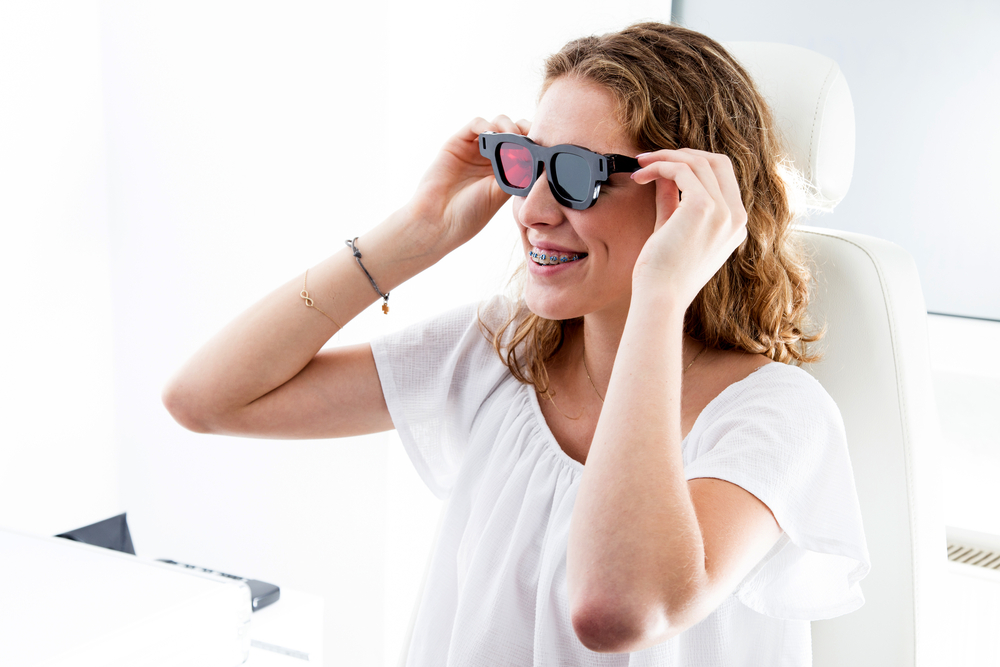
Some patients are sensitive to light, motion, screens, or busy visual environments. Therapeutic tints may help improve comfort by reducing visual stress and helping the brain process visual information more efficiently.
Tints may be considered for patients dealing with post-concussion symptoms, migraines, light sensitivity, or visually triggered discomfort. The goal is not simply to make things darker - it is to find a tint that supports comfort without limiting function.
Tracking Exercises And Visual Skill Development
Tracking exercises are often used to improve how smoothly and accurately the eyes move together. These skills are especially important for reading, sports, schoolwork, computer use, and daily visual attention.
A custom vision therapy program may focus on:
- Eye teaming and coordination
- Eye tracking and focusing skills
- Visual processing and reaction time
- Depth perception and spatial awareness
- Visual comfort during reading or screen use
These exercises are guided and adjusted over time, so progress can be monitored and the program can be modified as needed.
Building A Program Around The Patient
The right vision therapy or vision rehabilitation plan starts with a detailed evaluation. A neuro-optometrist looks at the patient’s visual symptoms, medical history, eye alignment, focusing ability, tracking, and binocular vision function. From there, therapy may combine in-office sessions, home-based activities, lenses, prisms, tints, or rehabilitation strategies.
This personalized approach can be especially helpful when symptoms interfere with school, work, sports, driving, or recovery after a neurological event. The goal is to help the visual system work more comfortably and efficiently in everyday life.
When To Consider Neuro-Optometric Vision Therapy
Vision therapy may be worth considering if you or your child struggles with frequent headaches, eye strain, double vision, dizziness, motion sensitivity, reading fatigue, poor tracking, or visual symptoms after a concussion. These concerns can affect quality of life even when eyesight seems “clear.”
Contact NeuVision Therapy & Rehabilitation to learn more about custom vision therapy, rehabilitation and neuro-optometric care. Visit our office in Richfield, Minnesota, call/text (612) 200-3286, or email info@neuvisiontherapy.com to book an appointment today.
Quick Links

Keep
In Touch
Powered by